


Late Elementary
Late Elementary Students Mature Into Dynamic, Confident Individuals.
4th & 5th Grade
Late Elementary is a crucial stage of development. They are working through complex problems on their own. Your child is becoming more aware of the world beyond their own personal sphere of experience as well as the skills and traits that make them unique. The beliefs – about themselves and the outside world – that they develop during this period will become a core pillar of their identity as an individual.
Our Curriculum
Fourth Grade
4th graders are industrious, curious, and serious about fairness and justice, characteristics we encourage and cultivate.
-
The 4th grade English Language Arts curriculum focuses on empathy building and essential aspects of functioning as a community together. Students are asked to step into the shoes of various characters and animals on their journeys of discovery and belonging. Through novel studies and text-based discussions, students learn to not just enjoy their books but also examine their literary depth. A portion of the year will connect with themes of ecosystems also studied in science class and will include a research project and trips to the McWane Center. Another portion of the year will connect with the 4th-grade Alabama history curriculum and the Civil Rights movement.
-
In fourth-grade mathematics, students deepen their understanding of our base-ten number system by exploring place value, powers of ten, decimals, and operations with whole numbers and decimals. They learn to read, write, compare, round, and compute with numbers while recognizing patterns and relationships that help make complex calculations more efficient. Students also develop algebraic thinking through numerical expressions and problem-solving. In geometry and measurement, they classify two-dimensional figures and apply formulas to find the volume of rectangular prisms, including composite solid figures, connecting mathematical concepts to real-world situations.
-
Fourth Grade Alabama History explores how geography, native peoples, colonization, and economic development shaped the state. Students examine key events like the Civil War, Reconstruction, and Civil Rights Movement, connecting Alabama’s story to broader themes in U.S. history.
-
Fourth Grade Science explores energy, motion, and waves, examining how they transfer and interact with matter. Students study ecosystems, Earth’s systems, and natural patterns, applying science to solve problems and use energy efficiently and sustainably.
-
In fourth-grade French, students develop their listening, speaking, reading, and cultural understanding through storytelling, conversation, music, and interactive experiences. Using the Teaching Proficiency through Reading and Storytelling (TPRS) approach, students acquire language naturally as they engage with stories, retell events, and communicate using vocabulary related to topics such as animals, family, and food. Through songs, role-playing activities, and creative projects, students build confidence in pronunciation and communication while exploring French culture and traditions. Highlights of the course include learning music for Lessons & Carols, creating French menus, participating in shopping and restaurant simulations, and researching famous landmarks in Paris.
-
Fourth graders begin to learn the recorder, learn more about the structure of larger works of music, and transposition of simple melodies from treble to bass clef or vice versa. They expand upon their knowledge of musical keys going up to four sharps and flats both major and minor. They begin learning about the qualities of musical intervals as well as reading in more compound time signatures. Students can transpose a simple melody from treble to bass clef or vice versa. Students can read rhythms in compound time signatures. They can identify major and minor keys up to 4 sharps or flats. Students can identify intervals and their quality. Students learn to play recorder notes GAB, High D, and High C.
-
Fourth grade students begin to solidify their understanding of art materials and processes. They continue to explore how the elements of art work and learn about art principles (different ways the elements can work together). We develop further skills in techniques of painting, drawing, collage, and sculpture. We will explore personal and cultural expression as well as universal themes and the styles of master artists. Students create a sketchbook to use for planning their creations, practicing techniques and reflecting on their completed artworks.
Fifth Grade
5th graders start thinking about issues from multiple perspectives, begin developing an independent self-image, and love to gather and classify facts.
-
Fifth grade English Language Arts engages students in storytelling. How do we care for each other? How is our identity formed? How do different people live? How do we tell stories that matter? Students will explore a wide range of literary genres and will understand elements of good storytelling as they examine various texts and craft their own stories. A major emphasis will be placed on exploring textual evidence and crafting formal arguments. Throughout the year, they will make connections with history, engage in research, and explore material from the Birmingham Civil Rights Institute. An anchor text each year is The Watsons go to Birmingham by Christopher Paul Curtis.
-
Fifth grade math begins the study of higher level math concepts and thinking. Utilizing a traditionally sixth grade course (Course I), students dive deeper into the concepts of number operations, properties, data, fractions, and functions.This course is an important foundation in higher level math thinking.
-
Fifth Grade Science investigates matter, energy, and forces in living and physical systems. Students explore patterns in nature, ecosystems, and Earth’s systems while applying technology and engineering to solve problems and understand how science connects to everyday life.
-
Fifth grade social studies focuses specifically on American history with an emphasis on the Constitution of 1787. Students discuss current national and global events in tandem with their study of American history in order to further develop their understanding of living history. Fifth grade social studies builds on many of the ideas and events that have been covered in the Lower School such that students begin to put together the historical pieces they have learned into a cohesive whole.
-
In fifth-grade French, students build their communication skills through conversation, storytelling, reading, and cultural exploration. They learn practical vocabulary related to school, their community, the body, animals, weather, food, and daily life while developing an understanding of foundational grammar concepts such as noun gender, articles, adjective agreement, and common verbs. Through skits, dialogues, projects, and interactive activities, students gain confidence in listening, speaking, reading, and writing in French. The course also introduces students to the diverse Francophone world through studies of Canada, music, cuisine, and culture, helping them appreciate the many places and people connected by the French language.
-
Fifth graders begin learning about irregular time signatures, they learn all major and minor key signatures, the qualities of all musical intervals, and basic chord qualities and cadences. Students can read rhythms in irregular time signatures, all major and minor keys, and all musical interval qualities. Students can identify or write a basic chord and cadence. Students learn to read notes GAB, both D's, both C's, F#, F, and E.
-
Fifth grade students will again explore how the elements and principles of art work together to create final works for a variety of purposes - utilitarian, expressive, and non-representational. We will develop further skills in techniques of painting, drawing, collage, sculpture and ceramics. Students create a personal sketchbook to use for planning and reflection throughout the year.
-
Students learn the basic of participation in and leadership of a brief service of worship from the Book of Common Prayer. Students learn to identify the seasons of the liturgical year. Students also learn about specific feasts and fasts of the liturgical year and their significance.
Our Flex Period
As our students mature, we recognize that making choices and developing independence are important developmental milestones. Flex period allows students to make monthly choices to enhance, support, and/or explore new areas of interest within the academic curriculum.
Each teacher leads a flex period session. These sessions include academic support, enrichment, additional project time, and club meeting times. Students work with their homeroom teacher to develop an individual monthly schedule for their flex time.
Flex period is built into all 4th- to 8th-grade student schedules. It occurs on Mondays, Tuesdays, and Thursdays each week.
For example, a student flex schedule for the first quarter of school may include:
| Monday | Tuesday | Thursday | |
|---|---|---|---|
| Main Support | Writing Enrichment | French Help |
Flex options change throughout the year, and students are able to sign up for new sessions each month. Their flex schedule is determined through student interests and needs in addition to teacher and parent input.
Our Navigation Course
Advent’s Navigation course is designed to provide an opportunity for students in grades 5—7 to learn and practice critical life skills for success in and out of the classroom. Each unit of study is broken into 9-week segments (matching the academic quarters). Classes meet once a week during this time and are taught by homeroom teachers and leadership team staff.
Units of Focus:
Study Skills — Study skills will focus on developing strong organizational practices, note-taking skills, helpful technological tools, and time management skills, etc.
Financial Literacy — Financial literacy will focus on developing skills like money management, savings and investing, credit and debit, wages and salaries, and personal budgets.
Public Speaking — Students will develop an appreciation for strong public speaking skills and will learn techniques to improve their own ability to speak in front of a variety of audiences.
Nutritional Well Being — This unit will focus on the connection between physical, mental, and emotional well-being. Students will learn to read food labels, will explore the importance of balance, and will learn to evaluate their own healthy habits.
Field Trips
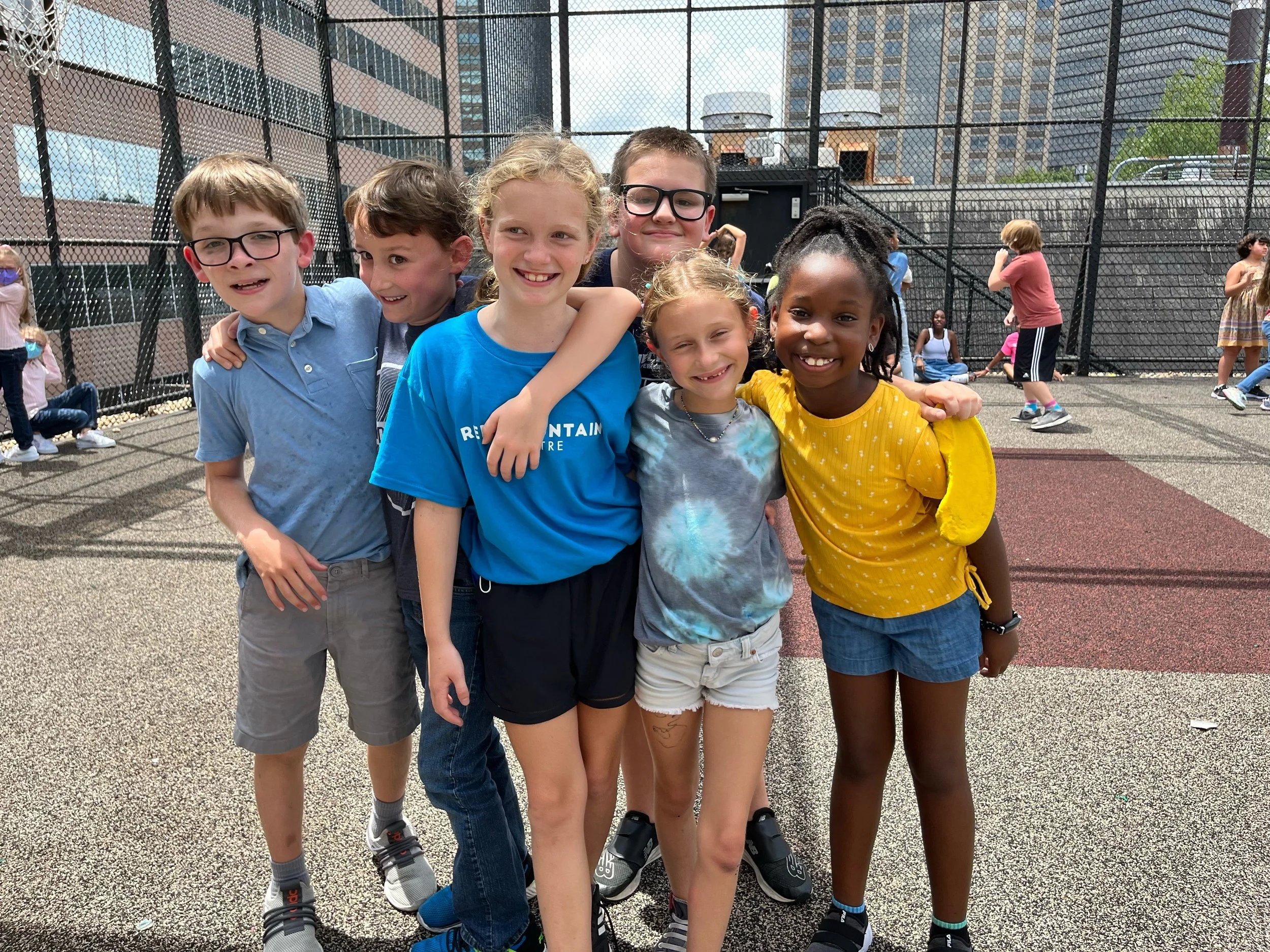
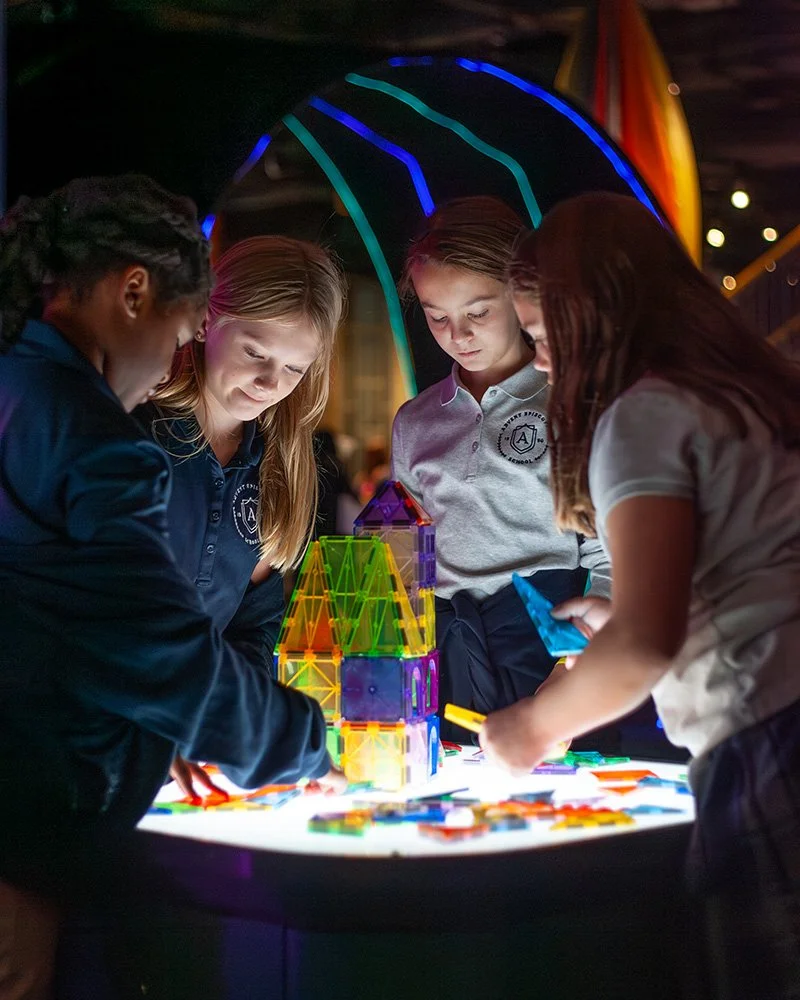
We’ve established field trips as an integral part of our curriculum to allow students to experience learning in real-life settings. Understanding more about the world (and city and state!) around them empowers our students to more deeply understand and apply the concepts they are learning about in the classroom. Our location in the heart of downtown plays a critical role in our ability to expose students in a safe but meaningful way to the amazing resources we have right at our doorstep.
-
Camp McDowell Farm School
The Children’s Theatre
Birmingham City Library Archives
McWane Science Center
Historical Downtown Birmingham Walking Tour
Capital Tours in Montgomery -
The Georgia Aquarium and Atlanta History Center
The Children’s Theatre
Birmingham Civil Rights Institute
Burritt on the Mountain